














Applications of Digital Twins in Industrial Sectors
The Digital Twin lies at the heart of the shift from simple electronic control to a boundless data environment and full-scale industrial transformation. So, is it truly feasible to implement Digital Twins in current manufacturing operations? We invite you to explore the article “Applications of Digital Twins in Industrial Sectors” to find out more.
Table of Contents
What Is a Digital Twin?
Changes in today’s manufacturing landscape are happening faster than at any other point in history. Over the past decades, we have witnessed a shift from simple electronic control to limitless data environments and industrial transformation. Competing in today’s market is intense, and a fundamental factor is the ability to manage and utilize data to achieve a company’s strategic goals. The Digital Twin sits at the center of this transformation.
Although there are many definitions of “Digital Twin,” the simplest way to understand it is this:
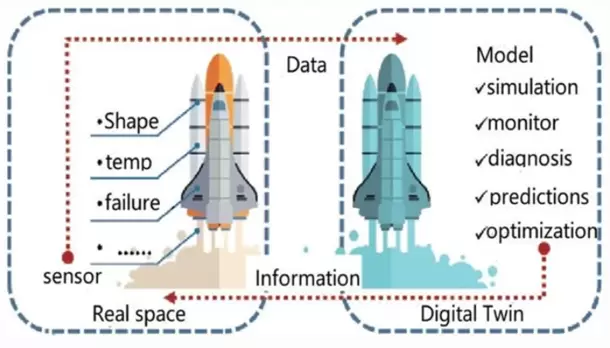
A Digital Twin is a virtual model that accurately and comprehensively mirrors a real-world physical asset.
That “physical asset” can be anything—from a manufactured object such as a car, airplane, or pharmaceutical product, to buildings, or even entire production systems and processes, including machinery and equipment. Every product has identifiable characteristics in the real world, and the Digital Twin fully represents these attributes through virtualization. In reality, virtualization technologies continue to evolve to achieve a complete and perfect simulation between the physical object and its digital counterpart.
The Feasibility of Digital Twins in Today’s Manufacturing Operations
The first concept of a Digital Twin was introduced in early 2002 at a manufacturing engineering conference by Professor Michael Grieves of the University of Michigan. At that time, the idea did not gain immediate traction due to its complexity and the lack of sufficient data-processing capabilities needed to deliver real value.
However, over time—like many modern concepts and methodologies used in today’s industrial landscape—Digital Twins have greatly benefited from the rise of the Industrial Internet of Things (IIoT), Industry 4.0, and the maturation of many other advanced technologies.
Digital Twins rely on several cutting-edge technologies made possible by IoT, such as Big Data analytics, application development and connectivity, business process management, and, above all, core technologies evolving within the manufacturing world, including:
- Smart automation and IIoT-connected control systems
- Product Lifecycle Management (PLM)
- Computer-Aided Design (CAD)
- Digital simulation
- Manufacturing Process Management (MPM)
- Manufacturing Operations Management (MOM)
- Virtual Reality & Augmented Reality (VR/AR)
- These technologies combine in various ways to support the creation and operation of Digital Twins in manufacturing. Naturally, we cannot expect a perfect one-to-one match between the digital twin and the physical model. But one thing is certain: as technology continues to advance, the accuracy between them will increasingly converge.
And of course, the benefits that Digital Twins bring to enterprises are undeniable.
Virtual Reality Experience with the 3DEXPERIENCE Platform
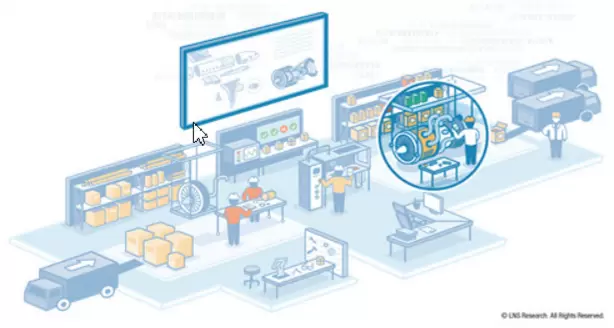
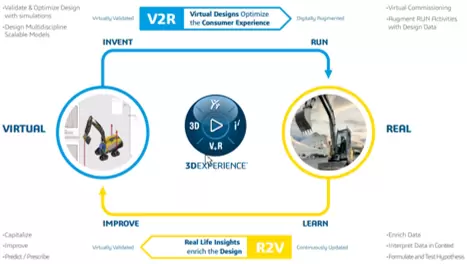
The 3DEXPERIENCE platform, developed by Dassault Systèmes, is a collaborative business and innovation platform designed to connect people, processes, data, ideas, and solutions. It enables organizations to leverage a rich virtual world to define and optimize manufacturing processes and systems, supply chains, and operations before implementing them in the real world. From marketing and sales to sourcing, industrial engineering, and digital manufacturing, the 3DEXPERIENCE platform empowers every department in your organization with comprehensive data for accurate and effective decision-making.
Related posts
How to Shorten Product Development Time: 5 Critical Factors Companies Often Overlook
Want to shorten product development time but don't know where to begin? Discover five crit...
Modern Product Development: Why Many Manufacturers Still Face Product Launch Delays
In today’s manufacturing environment, product development is no longer an isolated task ha...
What Makes New System Vietnam Different in Your Digital Transformation Journey?
As a Gold Partner of Dassault Systèmes, New System Vietnam delivers CAD/CAM/CAE, PLM, cybe...
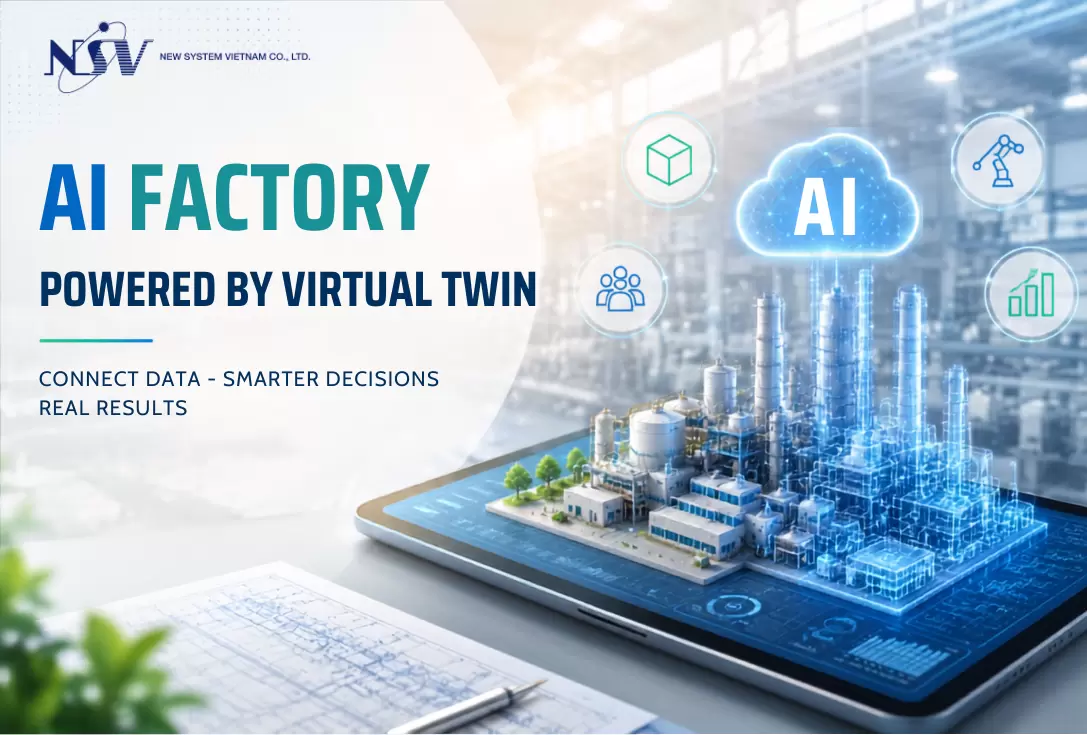
AI Is Smart, But It's Not Enough: Why Virtual Twin Is Becoming the Foundation of Industrial AI
Discover why Virtual Twin is becoming the foundation of Industrial AI. Learn how connected...
Technology Updates & Trends: How CAD Is Evolving in the Age of AI and Cloud
CAD is no longer just a 3D design tool. Discover how emerging trends such as AI, cloud, an...